


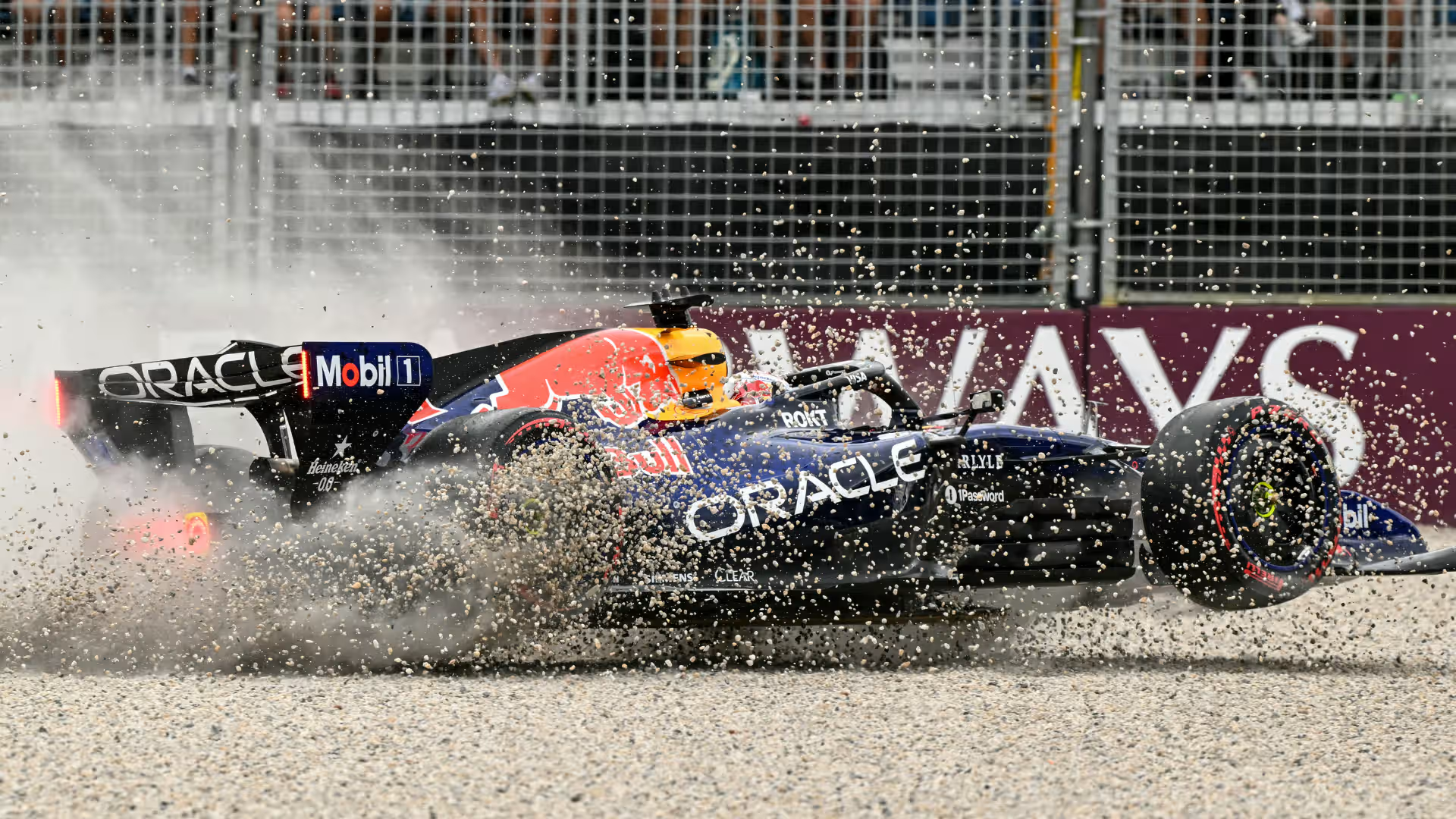
Verstappen’s sudden rear axle lock in Melbourne left Red Bull with more than a damaged car. It handed the team its first serious systems question of the new Formula 1 era.
Before a lap time appeared beside Max Verstappen’s name in Q1, Red Bull had a telemetry problem it could not ignore. The four-time world champion began his first flying lap, braked for Turn 1, and immediately lost the rear of the car. It was not a slow spin or a small correction gone wrong. The rear axle locked without warning, sending Verstappen across the gravel and into the barrier.
Medical staff evaluated him after the steering wheel violently jerked from his grip during the impact, but cleared him shortly after. The damage to his weekend, however, was severe. With no lap time set, Verstappen dropped to the back of the grid.
At the front, Mercedes delivered a clean statement. George Russell took pole, while teammate Kimi Antonelli completed a front row lockout. Isack Hadjar salvaged third for Red Bull, but Verstappen’s crash turned the team’s afternoon into a technical investigation.
Rear Axle Lock Points To A Deeper Red Bull Concern
This was not a standard case of a driver overcooking the entry into Turn 1. Verstappen’s own explanation pointed to something more abrupt. Speaking after qualifying, he said the rear axle locked the moment he touched the brake pedal, before he had a normal chance to manage the slide.
“I’ve never experienced something like that before in my career”, Verstappen said.
Turn 1 arrives after the main straight, where drivers brake from very high speed into a fast right-hander. Any instability there becomes critical because the car is loaded, light on fuel, and still carrying huge momentum. A front lock can often be controlled. A sudden rear lock leaves far less room for correction.
That distinction matters because Verstappen rarely searches for excuses after a mistake. His diagnosis was immediate and direct. The rear did not gradually step out. It locked sharply under braking, which pushes the focus toward brake balance, energy recovery, rear stability, or a systems issue inside the new generation car.
The 2026 Rules Make This More Than a One-Corner Problem
The timing makes the crash even more significant. Formula 1’s 2026 regulations have changed the relationship between braking, energy recovery, and rear axle behaviour. The new power units lean far more heavily on electrical output, with the MGU K delivering 350kW and the overall power split moving close to 50 per cent internal combustion and 50 per cent electric power.
That extra electrical load changes how drivers feel the car when they brake, coast, recover energy, and redeploy power. Rear stability now depends on a more complex blend of mechanical braking, regeneration, aero balance, tyre grip, and software control. When that blend fails, the driver may feel the problem before the stopwatch explains it.
Red Bull will know that one crash does not prove a design flaw. Teams live with isolated failures across a season. Yet the nature of this incident gives engineers little room for comfort. An instant rear axle lock at the start of a qualifying lap is not simply messy. It is unpredictable, and unpredictability is what drivers hate most.
Hadjar’s Place Softens The Result But Sharpens The Question
Hadjar’s qualifying result gave Red Bull something useful to take from the session. A car from the same garage reached third, which suggests the team still has a competitive pace in the package. That matters because it keeps the problem narrow rather than turning the whole weekend into a performance crisis.
Still, Verstappen’s car carries the heavier question. He is the team’s main reference point, the driver most capable of driving around weakness, and the one Red Bull relies on to expose what the data cannot always show. When he says the rear axle locked out of nowhere, the team has to treat it seriously.
The contrast with Mercedes also hurts. Russell and Antonelli gave Mercedes the cleanest possible start to the season. Red Bull left qualifying with one car near the front and its lead driver facing a recovery race from the back. That split result is manageable on paper, but it puts pressure on the engineering group before the first Grand Prix has even settled into rhythm.
Sunday Now Tests Both Verstappen And The Car
Verstappen remained pragmatic after the crash. A high points finish is still possible, but Albert Park does not hand out easy overtakes. Traffic, tyre life, safety car timing, and confidence under braking will shape his recovery as much as raw pace.
For Red Bull, the bigger priority is clarity. The team must establish whether the rear axle lock came from a brake setting, an energy recovery issue, a hardware fault, or an unexpected interaction inside the new car. Until that answer arrives, every heavy braking zone carries a question.
Verstappen walked away from the crash, which remains the most important result of the session. The competitive consequence is still serious. Red Bull did not just lose a qualifying lap in Melbourne. It exposed the first major technical alarm of its 2026 campaign, and it happened in the one phase of driving where a world champion expects absolute trust from the car.
READ MORE: Red Bull Takes Blame For Verstappen’s Costly Austrian GP Qualifying Crash
FAQs
Why did Max Verstappen crash in Q1 in Australia?
Verstappen said the rear axle locked as soon as he hit the brake pedal. He had little chance to save the car.
Was Max Verstappen injured in the crash?
No. Medical staff checked him after the impact, but he was cleared shortly after.
Where did Verstappen crash at Albert Park?
He crashed at Turn 1 during his first flying lap in Q1.
Why is Red Bull worried about the crash?
The crash raised questions about braking stability, energy recovery, and rear axle behaviour in the 2026 car.
Where did Isack Hadjar qualify for Red Bull?
Hadjar qualified third, giving Red Bull a strong result despite Verstappen’s early exit.

